


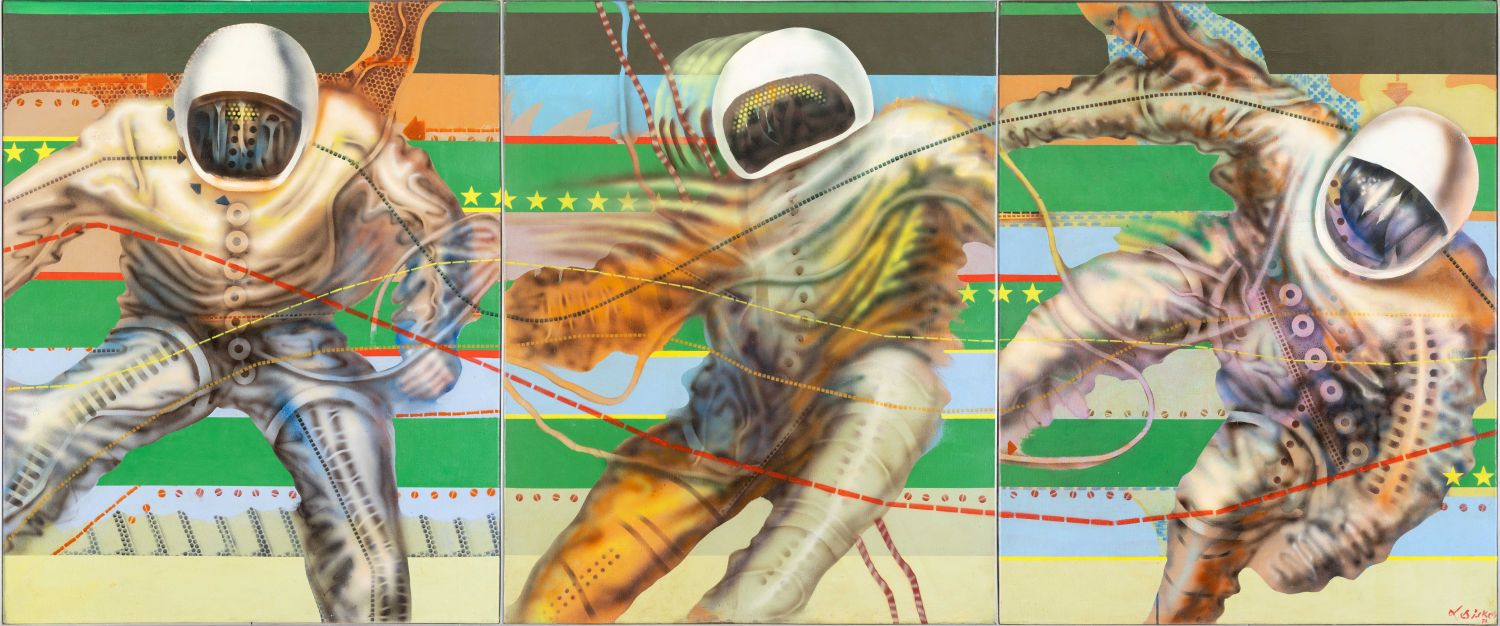
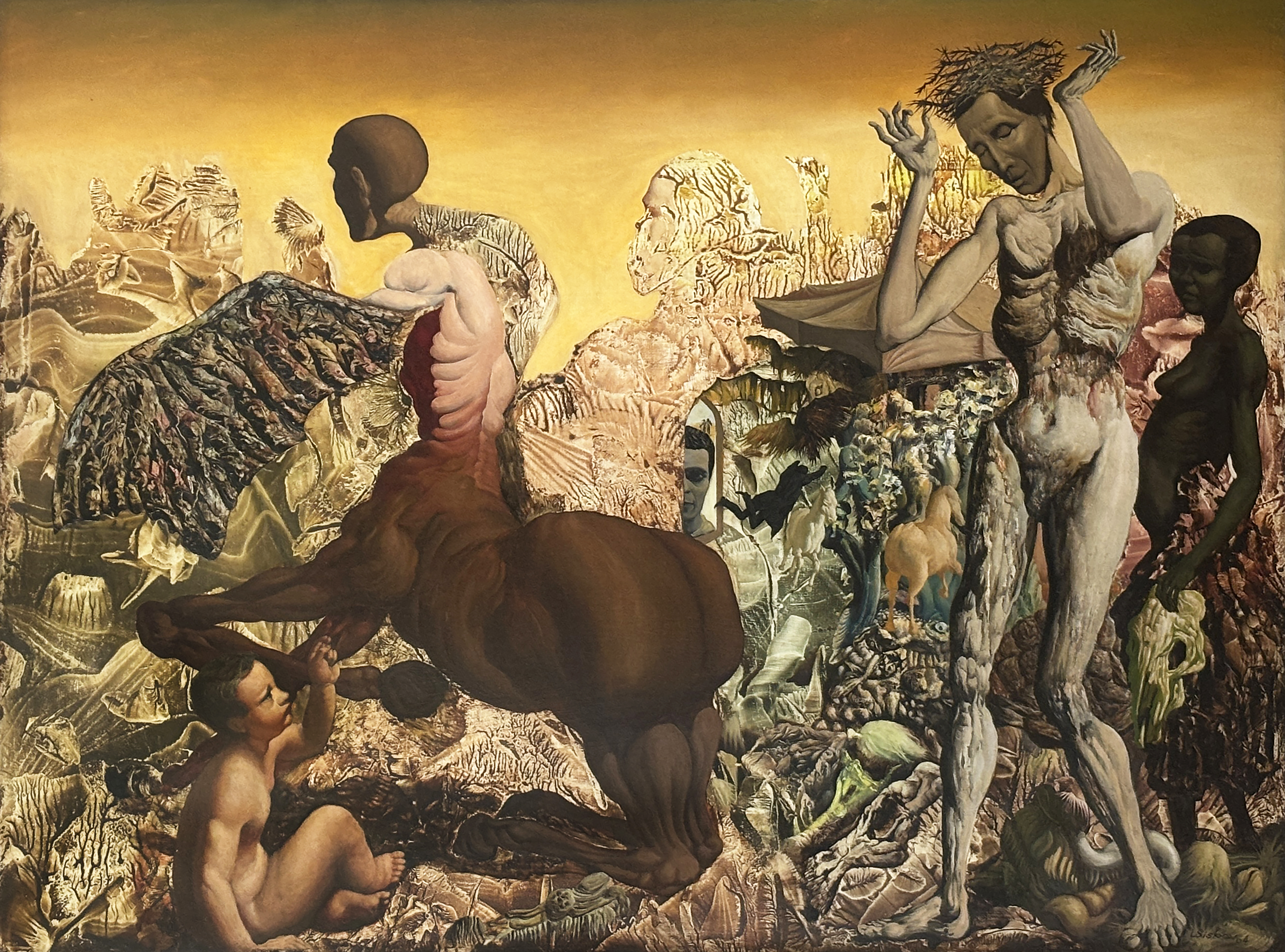
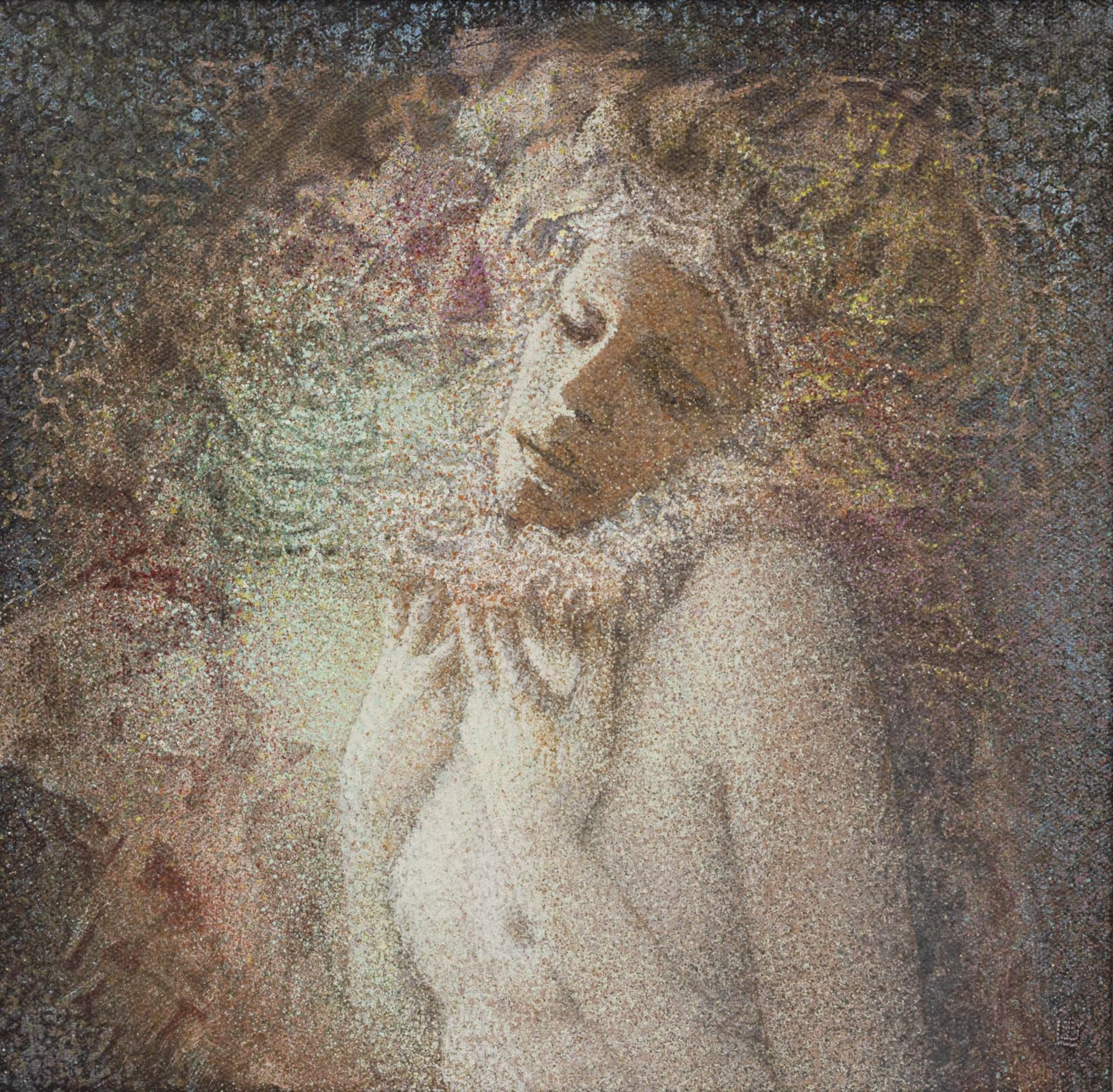
From the work of Lyudmil Shishkov, we present to you the paintings „Astronauts“, „Centaur“ and „Medusa“.
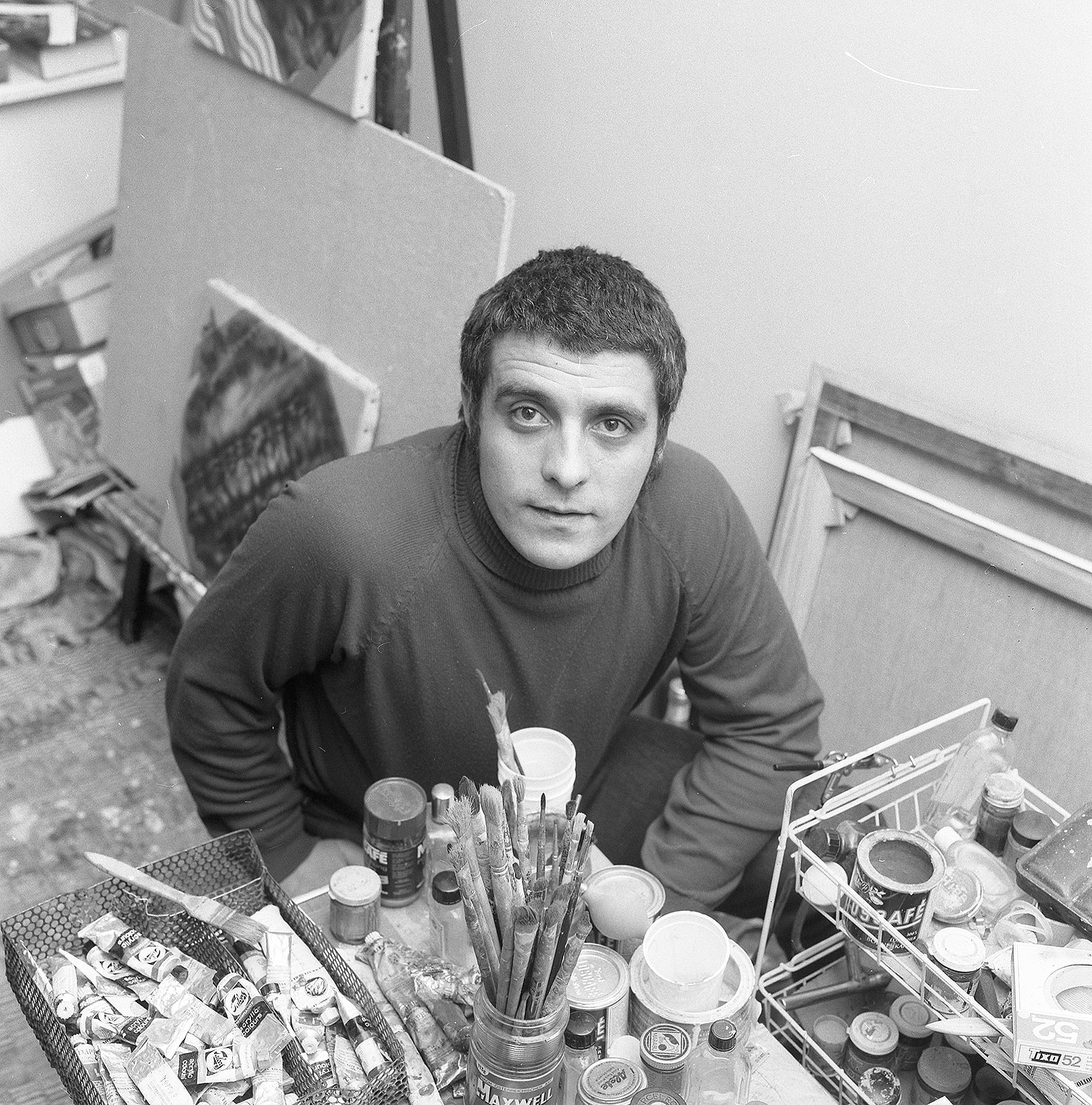
The name Lyudmil Shishkov is probably unknown even to many of the best connoisseurs of Bulgarian fine art. Search Bulgarian sources for “Lyudmil Shishkov, artist” — you will find nothing, although connoisseurs define him as a bright figure in Central European neo-avant-gardeism and his works are in the collections of leading museums, that one of his paintings is owned by the British royal family and that he was represented by famous galleries in Vienna, London and Milan.
Who is Lyudmil Shishkov?
The search for the answer to this question began in 2024 with the catalog of a German auction house. A painting caught my attention. It was a pointillistic image of Medusa, in a mysterious sfumato. The artist’s name sounded Bulgarian, even in Latin transcription — Ludmil Siskov. The painting was signed with a Cyrillic letter „Ш“, shaped like a crown. The same auction included another painting by Shishkov – a pop-art composition in Venetian red with erotic notes, entitled „Hot Chick“. If they weren’t one under the other in the catalog and there was no clear description, I shouldn’t have believed that they were works by the same author. This hinted at a multi-layered personality and an artist who was not afraid to experiment.
I immediately searched the Internet. The results were many. Ludmil Siskov was identified as a Hungarian, Austrian, and even Czech artist, but most sites containing biographical information about him noted that he was born in Sofia in 1936. The fact that the search for Ludmil Shishkov in Bulgarian sources was fruitless only increased my curiosity.
According to the websites that provide details about the artist's biography, in 1958 he moved from Bulgaria to Hungary (according to some sources as a ski racer). Before that, in Bulgaria, Shishkov graduated from the conservatory with a degree in piano and composition. He also began studying at the National Academy of Arts in Sofia. In Budapest, studying at the Academy of Fine Arts, he earned a living as a pianist, playing with some of the biggest names in Hungarian jazz of the time. In 1968, he was among the founders and leading figures of the group "Iparterv", which played a central role in the Hungarian neo-avant-garde. In the fundamental „History of Hungarian Art in the 20th Century“ (Gábor Pataki et al. Corvina Books, 1999) his name is cited at least twice.
His art during this period is associated with pop art and elements of abstractionism and surnaturalism, as well as with „Western“ themes - astronauts, rugby players, car drivers and jazz musicians populate his canvases, transferring symbols of Western visual culture into the social reality of Eastern Europe of that time. From this period are his „Astronauts“, a version of which is in the Hungarian National Gallery. It is significant that in the relatively closed totalitarian societies of that time he so quickly adopted new trends in world art.
In 1969, Shishkov moved again, this time to Austria, where he established his studio near Vienna. His art also evolved. Along with the graffiti-like images of the Pop Art period, he began to use pointillism techniques. For a while, he was associated with the art movement Superhumanism. In the 1990s, he returned to his earlier Pop Art themes and techniques, reinterpreting them much more expressively, with references to the work of the artist Francis Bacon. After 2000, he began to experiment with computer graphics, blurring the boundaries between painting, photography and video. He appeared as an illustrator (illustrating one of the Italian editions of Casanova's Return by Arthur Schnitzler) and a portraitist (painting a family portrait of Peter and Irene Ludwig - one of the greatest European collectors and patrons of art in the 20th century).
He works with the eccentric British gallerist Nicholas (Nick) Treadwell. He has had solo exhibitions in various European countries, including the iconic „Galleria del Naviglio“ in Milan, which discovered or first introduced to the Italian public some of the most significant names in 20th century visual art. Three of his works were included in the major exhibition „Ludwig Goes Pop + The East Side Story“ at the Ludwig Museum in Budapest (2015), where they were exhibited alongside works by Andy Warhol, Roy Lichtenstein and other major names in 20th century art.
In 2018, „Treadwell Gallery“ organized a major retrospective of Shishkov in Vienna. Several of his retrospectives have been organized by leading galleries in Budapest, the last of which recently ended (Ludmil Siskov: Pop Pulzus, Nemes Galéria, January 23-February 27, 2026). Unfortunately, Ludmil Shishkov cannot enjoy his recent successes. He left us in 2024, remaining undeservedly unknown in his homeland.